
WAREHOUSE & SHOWROOM

15700 Middlebelt Rd
(Between 5 & 6 Mile)
Livonia, MI 48154

(734) 751-4413

HOURS

Now open earlier!
Sunday: 11:00 am – 5:00 pm
Monday: 11:00 am – 6:00 pm
Tuesday: CLOSED
Wednesday: CLOSED
Thursday: 11:00 am – 6:00 pm
Friday: 11:00 am – 6:00 pm
Saturday: 10:00 am – 6:00 pm

What Are the Top Types of Modular Sectionals?

A modular sectional can change shape as a room or household changes. Unlike fixed sofas, its separate seats and corner units can often be rearranged. That flexibility sounds simple, but the right layout depends on room dimensions, doorways, and how people use the space. This guide introduces the main types, from compact L-shaped designs to expansive U-shaped arrangements. It also covers chaise, pit-style, and sleeper configurations, though names and available pieces vary by brand. Small details matter.

An L-shaped sectional can define a corner without closing off the room. U-shaped designs offer more seating, but may dominate smaller spaces. Chaise configurations provide a place to stretch out, while pit-style sectionals create a lounge-like setup with broad, connected seating. Some modular systems include sleeper pieces or storage, but those features can affect comfort, price, and how easily modules move. Measure twice. Check the full footprint, including space needed to walk around the furniture and open nearby doors. Fabric, cushion firmness, connector strength, and replacement-part availability are also worth checking. A showroom arrangement may feel spacious; the same pieces can feel crowded at home. There is no perfect configuration for every room. Comparing these types against your measurements, routines, and budget makes it easier to choose a modular sectional that works beyond the first impression.
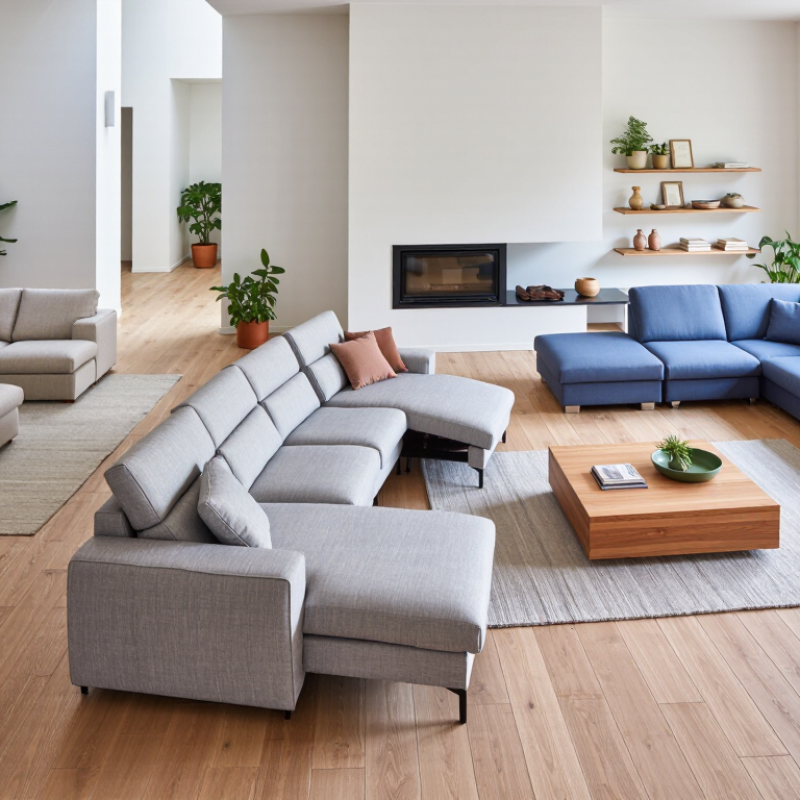
What Are the Top Types of Modular Sectionals?

L-Shaped Modular Sectionals

L-shaped modular sectionals are popular because they create a clear seating zone without requiring a separate sofa and loveseat. Two connected sides fit neatly into a corner or define one edge of an open-plan room. The longer side can face a television, window, or conversation area. That flexibility matters.

Before choosing a configuration, measure the room and the route through it. Leave space for doors, drawers, and everyday walking paths; a sectional that fits on paper can still make a room feel cramped. Check whether the chaise or corner unit can switch sides. Some arrangements are reversible, while others are not. Small detail, big difference.

Think about how people actually use the seating. A deeper chaise suits lounging, while a firmer, more upright seat may work better for conversation or reading. Removable modules can make moving and rearranging easier, but connectors should hold the pieces securely during use. I would not assume every “modular” design offers unlimited layouts. The shape and number of modules set real limits. Fabric samples also help: colors can look different in daylight than they do under warm lamps. A little measuring and testing beats guessing.

U-Shaped Modular Sectionals

U-shaped modular sectionals suit rooms where conversation matters as much as lounging. Three sides create a natural gathering area, with the open center facing a coffee table or fireplace. Modular pieces let you adjust the layout as household needs change. Still, a U can overwhelm a narrow room. Measure the full footprint, including the path people use to walk behind the seating. Leave enough clearance for drawers, doors, and side tables.

The fit depends on the modules, not just the overall shape. Check connector locations, arm placement, and whether each seat can be rearranged without leaving awkward gaps. A chaise-like end can stretch out toward a window, while a shorter return may preserve space for a reading lamp. Sit on the configuration if possible. Seat depth that feels relaxed to one person may feel too deep to another. Small detail. Big difference.

Market figures offer context, not proof that U-shaped designs are bestsellers. Grand View Research’s 2024 furniture market report estimated the global furniture market at $766.2 billion in 2023; it does not isolate modular or U-shaped sofas. That limitation matters. Choose based on room measurements and daily use, not broad market growth. And be honest about the trade-off: a U-shaped arrangement feels inviting, but moving it through a tight doorway can be frustrating.

Chaise Modular Sectionals

Chaise modular sectionals combine movable seating pieces with an extended footrest or lounging seat. The chaise can sit at one end, creating a relaxed spot for reading or stretching out after work. Some designs let you move it to either side; others have fixed left- or right-facing layouts. Check the configuration before ordering. A piece that looks flexible in a photograph may not suit your room’s traffic flow.

Tips: Measure the full arrangement, not just the sofa’s longest edge. Mark its outline on the floor with painter’s tape. Leave clear paths to doors and windows, and check that the chaise does not block a cabinet or heater. Small detail, big difference.

Think about how people will use the room. A deep chaise is comfortable for lounging, but it can leave less space for guests to sit upright. Removable modules may help you adjust the layout later, though connectors and arm pieces can limit your options. Ask how the modules attach and whether the covers can be cleaned as directed. It is also worth considering the less exciting part: a chaise can dominate a compact room, even when its dimensions technically fit. A floor plan helps you judge whether the extra stretch is genuinely useful.

Pit Modular Sectionals

Pit modular sectionals create a sunken-lounge feel without requiring a built-in floor well. Their deep seats and connected modules form a broad, inward-facing area for reading, movie nights, or conversation. Grand View Research’s 2023 Modular Furniture Market report valued the global market at USD 68.9 billion, reflecting demand for adaptable furnishings. That figure covers modular furniture overall, not pit sectionals specifically. Still, it helps explain why reconfigurable seating has growing appeal.

Check seat depth before choosing a layout. A pit-style arrangement often works best when people can sit back with their feet up, but deep cushions may feel awkward for shorter guests. Measure the room, including walking routes around the sofa. Leave enough space to pass without turning sideways. Deep seats matter. Removable covers and rearrangeable modules can make daily use easier, especially in homes with children or pets. Yet more pieces can mean more seams to clean, and modules may shift on slick floors. One honest drawback: a dramatic, low profile can be less supportive for standing up. Try the seat height in person, if possible. Measure twice.

What Are the Top Types of Modular Sectionals? — Pit Modular Sectionals

Type Typical Configuration Key Features Works Well For Things to Consider
Pit Modular Sectional Seats and corner modules arranged around a large, central seating area; some layouts include a broad ottoman. Creates a deep, enclosed lounge space where people can sit facing one another or stretch out. Media rooms, relaxed family spaces, and households that often gather in groups. Needs substantial floor space. Check the overall footprint, access routes, and whether the center arrangement can be reconfigured.
L-Shaped Modular Sectional A row of seats joined to a shorter return at one end. Forms a corner seating area while keeping one side of the room more open. Living rooms, open-plan spaces, and seating areas arranged around a coffee table. Confirm whether the return can be placed on either side, especially if the room layout may change.
U-Shaped Modular Sectional Three connected seating sides, usually with two returns facing one another. Offers a sociable arrangement with seats oriented toward a shared center. Larger rooms and households that want multiple seats in one conversation area. Measure carefully: the two returns can take up considerable width and may affect walkways.
Chaise Sectional A sofa-length row with an extended chaise module at one end. Combines conventional seating with a long surface for reclining. Smaller living areas where a full U-shaped or pit layout would be too large. Check the chaise orientation and its effect on circulation through the room.
Straight Modular Sofa Individual seat modules arranged in a single line, with optional end pieces or ottomans. Has a simple footprint and can often be extended by adding compatible modules. Narrow rooms, apartment living, or spaces where a sectional return would block movement. Verify module dimensions and connector compatibility before planning future additions.
Modular Sofa with Ottoman A straight or L-shaped seating arrangement paired with a movable ottoman. The ottoman can serve as a footrest, extra seat, or flexible centerpiece. Rooms that need adaptable seating and a layout that can change for different activities. Allow enough room to move around the ottoman, and use a tray if placing items on top.

Curved Modular Sectionals

What Are the Top Types of Modular Sectionals?
Curved Modular Sectionals

Curved modular sectionals bring a softer outline to living rooms dominated by straight walls and square furniture. Their angled seats can create a welcoming conversation area without pointing everyone toward a television. Individual modules may be rearranged, depending on the design, to suit a new room layout. Some curves are gentle; others take up more floor space than their photos suggest. Measure carefully.

The arc works especially well in open-plan rooms, where it can define a lounge area without adding a partition. Leave enough clearance behind and beside the sofa for people to walk comfortably. Check how the pieces connect, too. A loose join can shift during daily use, and not every curved module fits neatly against a wall. That can be a drawback, not a deal-breaker.

Tips: Mark the sofa’s full footprint on the floor with painter’s tape before ordering. Include side tables and walking paths in your plan. Sit on a similar curved seat if possible; the shape may feel less supportive than a straight section. Small rooms need care. Measure twice.

Top Types of Modular Sectionals: Curved Modular Sectionals

Curved modular sectionals can be arranged in compact, L-shaped, U-shaped, crescent, or semi-circular layouts. The seat counts shown are illustrative planning examples; actual capacity depends on module sizes and the specific configuration.