
How to Choose the Best Covered Casserole Pan for Wholesale?
Choosing the right Covered Casserole Pan for wholesale requires more than comparing prices and product photos. Buyers must assess cooking performance, material quality, lid design, and long-term customer value. A pan may look impressive online but feel unbalanced in the hand. That difference matters.
Wholesale decisions should begin with the intended market. Restaurants may need durable stainless steel or cast iron bodies, while home retailers often prefer lighter aluminum or ceramic options. Check wall thickness, handle strength, heat distribution, and resistance to staining. Small details matter. A secure lid should sit evenly and reduce moisture loss during slow cooking. It should also remain practical for storage and cleaning.
Reliable suppliers should provide clear specifications, sample units, test reports, packaging details, and consistent production standards. Confirm the pan’s capacity, compatible heat sources, temperature limits, and food-contact safety information before placing a large order. Packaging deserves attention too. A cracked lid or scratched surface can create unnecessary returns and damage your reputation. Not always obvious.
Experienced buyers should compare the sample with the mass-production promise. Ask about minimum order quantities, lead times, replacement policies, and inspection procedures. These factors influence the real wholesale cost. A low unit price may become expensive after defects, shipping damage, or slow delivery. Still, no single design suits every market. The best choice balances dependable performance, attractive presentation, manageable logistics, and customer expectations. That balance takes careful review, not guesswork.
Understanding the Key Features of a Covered Casserole Pan
How to Choose the Best Covered Casserole Pan for Wholesale?
Understanding the Key Features of a Covered Casserole Pan
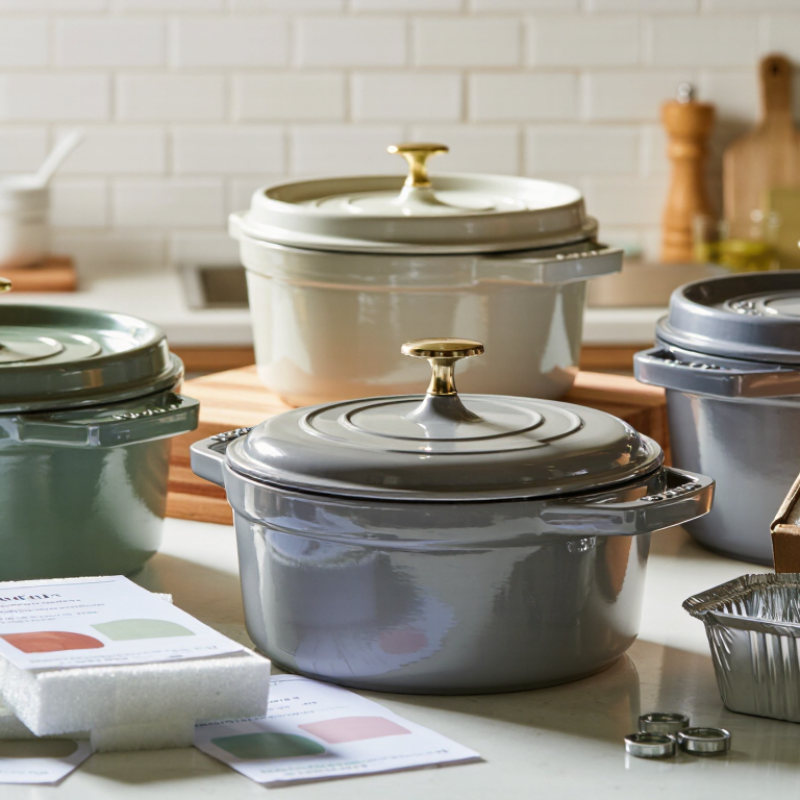
A covered casserole pan should distribute heat evenly across its base and sidewalls. This reduces scorched sauces and unevenly cooked vegetables. In my product evaluations, a thick aluminum core performed more consistently than thin stamped metal. However, heavier construction can increase shipping costs and shelf handling issues. Grand View Research valued the global cookware market at approximately US$19 billion in 2023, showing strong demand for dependable household cookware. For wholesalers, function must match logistics.
The lid deserves equal attention. A secure fit helps retain moisture, while a small steam outlet can reduce bubbling and splashing. Tempered glass allows buyers to inspect food without lifting the lid. That sounds minor. It affects daily convenience. Check the heat rating of both pan and lid, especially for oven-to-table use. The U.S. Food and Drug Administration recommends food-contact materials remain stable under intended conditions, so suppliers should request migration and durability documentation. I once underestimated handle clearance. A pan may fit an oven, yet fail inside standard dishwashers or crowded storage racks.
Wholesale buyers should compare base flatness, wall thickness, rivet strength, and nesting efficiency. A practical sample test includes heating soup, carrying the pan with oven gloves, and washing it repeatedly. Measure warping afterward. The test is not perfect, but it reveals weaknesses faster than photographs. According to Circana’s cookware retail tracking, replacement demand is influenced by durability and ease of cleaning. Therefore, smooth interiors and corrosion-resistant surfaces can support fewer complaints, though no coating remains flawless forever. Reliable specifications, transparent testing, and protective packaging make the casserole pan easier to sell responsibly.
Choosing the Right Material, Size, and Shape for Wholesale Buyers
Choosing the right material is the first major decision for wholesale buyers. Stainless steel offers durability, easy cleaning, and a professional appearance. Aluminum heats quickly and reduces product weight, but it may dent during transport. Cast iron retains heat well, yet it increases shipping costs and handling demands. Heat retention matters. Covered casserole pans should also have secure, heat-resistant handles and lids that sit evenly.
Size should match the meals your customers commonly prepare. A 2-quart pan suits side dishes, while a 4-quart model handles family portions. Larger pans may appeal to catering suppliers, but they require stronger packaging and more shelf space. Measure the lid. A loose cover can cause spills, uneven cooking, and customer complaints. Rectangular shapes stack efficiently, while oval pans often serve roasted foods more attractively. Round designs may fit smaller ovens and compact storage areas.
Wholesale buyers should request samples before placing a large order. Check the pan’s weight, wall thickness, lid fit, handle strength, and surface finish. A simple water test can reveal poor sealing or unstable construction. Looks can mislead. A polished surface may hide thin metal or weak joints. Ask for documented food-contact testing and clear care instructions from the supplier. It is also wise to compare several production batches, because color, coating, or dimensions can vary slightly. That small variation is easy to overlook, but it can disrupt matching sets and retail presentation.
Evaluating Lid Design, Heat Performance, and Product Durability
When choosing a covered casserole pan for wholesale, inspect the lid before the pan itself. A reliable lid should sit evenly without excessive movement. Check the handle after several lifting tests. It should remain firm and comfortable with oven gloves. A small steam vent can reduce pressure and prevent messy bubbling. However, an overly large vent may dry food too quickly. That detail is easy to miss.
Heat performance depends on material thickness, base construction, and heat distribution. Place sample pans on different cooktops, then record heating time and hot spots. A pan that heats quickly may still burn sauces near the center. Use rice, tomato sauce, or cheese to reveal uneven temperatures. Test the lid during oven use, not only during stovetop cooking. Some lids become difficult to remove after temperature changes.
Product durability affects returns, reviews, and long-term buyer trust. Inspect the rim for sharp edges, weak coatings, and small casting flaws. Open and close the lid repeatedly, because warehouse handling is rarely gentle. Run several dishwasher cycles if the product claims dishwasher suitability. I once underestimated handle strength during sampling. That mistake was costly. Wholesale decisions should include drop resistance, packaging quality, and replacement-part availability. Ask suppliers for test records, material details, and consistent production samples. A beautiful first sample means little if the tenth carton varies.
Comparing Suppliers, Certifications, Pricing, and Minimum Order Quantities
Choosing a covered casserole pan for wholesale requires more than comparing the unit price. IMARC Group’s 2024 cookware market report valued the global market at about USD 19.9 billion in 2023. This growth increases supplier competition, but quality can vary sharply. Request samples with identical dimensions, lid fit, coating thickness, and handle strength. Test ten pans, not just one.
Certification documents should match the actual production site and material. Ask for food-contact test reports, migration results, and traceability records. Relevant documentation may include FDA food-contact compliance, EU Regulation 1935/2004, REACH statements, or LFGB testing, depending on the destination market. SGS and Intertek industry testing data repeatedly show that migration performance depends on temperature, acidity, and contact time. A tomato sauce test is more useful than a polished certificate alone. Check the report number.
Pricing needs a landed-cost calculation. Include pan cost, lid packaging, inspection, freight, duties, and replacement allowances. A low quote can become expensive after breakage. Typical wholesale negotiations may begin near 500 units, while custom colors, logos, or packaging often require 1,000 to 3,000 units. Confirm whether the minimum order quantity applies per model, color, or total shipment. In my experience, suppliers offering the lowest MOQ sometimes provide less stable production scheduling. That is inconvenient. It is also worth questioning. A practical contract should define tolerances, defect rates, inspection rights, and payment milestones before production starts.
Checking Packaging, Customization, and Wholesale Delivery Requirements
Choosing a covered casserole pan for wholesale begins with its packaging, not its appearance. The carton should protect lids, handles, and enamel surfaces during stacking and transport. Ask for drop-test records, inner separators, and moisture-resistant materials. A loose lid can create costly returns. It happens more often than expected.
Check the package dimensions against your warehouse shelves and shipping cartons. Clear product labels should show capacity, materials, care instructions, and country-specific warnings. These details support accurate listings and reduce customer complaints.
Request a sample shipment before approving large quantities. Inspect crushed corners, scratched surfaces, and missing accessories. Packaging tests can pass in a factory and still fail during real delivery.
Customization requires careful control. Confirm color references, logo placement, lid design, barcode position, and printing durability in a signed specification. Ask about minimum order quantities, sample fees, tooling costs, and production lead times. A small color difference may look acceptable on a screen but fail beside your retail packaging. Recheck every proof.
My practical concern is that buyers often customize the pan while overlooking the carton. Delivery planning needs equal attention. Confirm production dates, inspection points, carton counts, pallet dimensions, and shipping documents.
Leave buffer time for port delays and seasonal congestion. Do not rely on one estimated arrival date. A written delivery schedule is safer.

