How to Choose Ordinary Plywood in 2026?
Choosing Ordinary Plywood in 2026 requires more than comparing prices. Buyers must examine strength, moisture resistance, surface quality, emissions, and manufacturing consistency. The wrong sheet may look acceptable in a showroom, then swell around a sink or split near a screw.
Industry data provides useful direction. The FAO Forestry Production and Trade database records global plywood production above 180 million cubic metres in recent years. Asia-Pacific remains the leading production region. Grand View Research also projects continued plywood market growth through 2030, supported by housing, furniture, packaging, and renovation demand. These figures show scale, but they do not guarantee quality. Market definitions and reporting methods vary. That matters.
A reliable selection process begins with the panel’s intended use. For indoor cabinets, inspect the face veneer, core gaps, sanding quality, and formaldehyde documentation. For humid areas, verify exterior or moisture-resistant bonding. For structural work, check the applicable performance standard and certified grading. The USDA Forest Products Laboratory Wood Handbook explains how veneer direction, density, moisture, and adhesive performance influence panel behavior. APA technical guidance adds practical information about structural plywood grades and installation.
Do not trust a perfectly smooth surface alone. Tap the panel, inspect its edges, and check whether layers remain tightly bonded. Ask for test reports, product certificates, and batch information. Certification claims should be traceable to an accredited body. A low price can be attractive. It can also hide weak cores, unstable moisture content, or inconsistent glue lines. In 2026, the best Ordinary Plywood choice balances verified performance, responsible sourcing, project conditions, and realistic service expectations.
What Ordinary Plywood Is and How It Is Classified
How to Choose Ordinary Plywood in 2026?
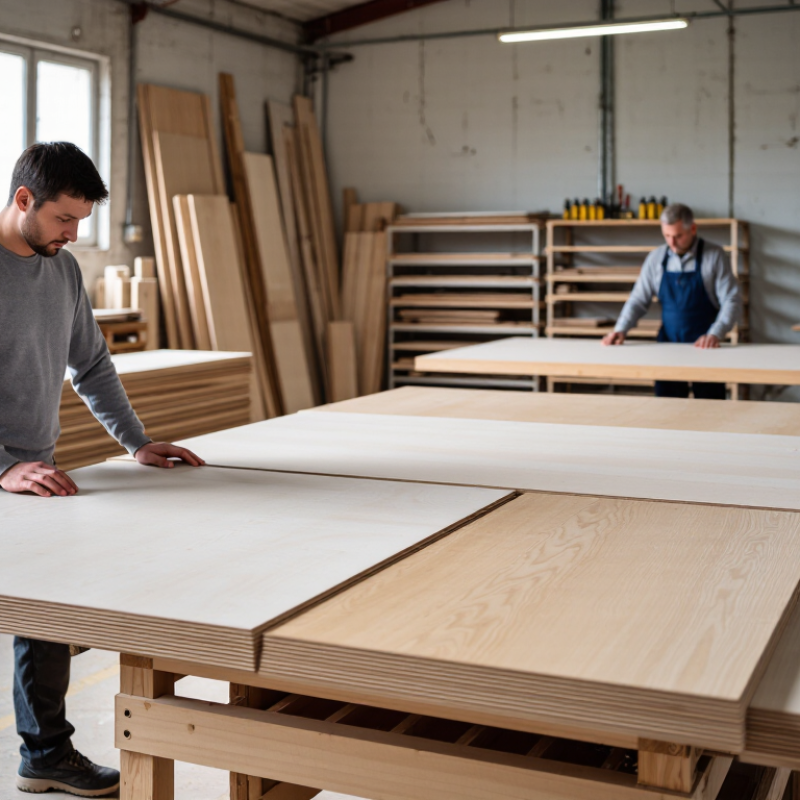
Ordinary plywood is made from thin wood veneers bonded in alternating grain directions. This cross-layer structure improves strength and reduces warping. It is commonly used for furniture parts, wall panels, packaging, and general interior construction. “Ordinary” is a market description, not one universal technical grade. Always check the product specification.
Plywood is classified by veneer quality, thickness, core structure, and intended environment. Face grades describe visible defects, including knots, patches, splits, and sanding marks. A smooth face suits painted furniture, while a rougher face may work behind panels. Core types include full-veneer construction and mixed-core construction. Full-veneer panels usually provide more predictable screw holding. Thickness often ranges from thin decorative sheets to heavy structural panels.
Adhesive performance creates another important classification. Interior plywood is intended for dry spaces. Moisture-resistant plywood handles occasional humidity but should not remain wet. Exterior or structural panels require verified durability and load ratings. Local standards may classify these properties differently, so compare the stated standard, emission information, and test data. In practical inspection, examine panel edges for gaps and uneven layers. Tap the surface gently. A hollow sound can indicate weak bonding, although this test is not conclusive. I once rejected a visually attractive sheet after finding loose inner veneers. Appearance can mislead. Even experienced buyers sometimes overlook storage damage, especially near corners. Choose according to actual moisture, strength, and finish requirements, rather than thickness alone.
How to Match Plywood Thickness and Size to Your Project
Choosing ordinary plywood in 2026 starts with the load, not the price. In my workshop, I measure the opening twice before selecting a sheet. A cabinet side may need 12 mm plywood, while a workbench top often needs 18 mm or more. These figures are starting points, not universal rules. Thin panels flex when spans are wide. They also show screw pull-out more easily. Check the planned supports, fastener spacing, and expected weight. A shelf holding books needs closer supports than a decorative wall panel. Keep that difference visible.
Sheet size should reduce joints without creating difficult handling. Standard full sheets can cover large areas, but a smaller panel may be safer to carry and easier to align. Leave a small expansion gap where indoor humidity changes. For a cabinet, measure the finished opening, then subtract door clearance, edge treatment, and joint allowance. I once cut a panel exactly to the drawing and forgot the trim. Rework cost more material and time. That mistake still influences my measurements. For flooring or exterior use, confirm the plywood’s exposure rating and protect cut edges. Do not assume greater thickness solves every problem. A warped thick sheet can perform worse than a flatter, properly supported panel. When uncertain, make a small test assembly, apply the expected load, and inspect deflection before cutting the full sheet.
How to Choose Ordinary Plywood in 2026?
How to Match Plywood Thickness and Size to Your Project
Common ordinary plywood is sold in nominal thicknesses from about 3.2 mm to 25.4 mm. Thin panels are generally used for lightweight backs, linings, and curved components, while thicker panels are more suitable for shelving, furniture parts, flooring overlays, and general construction work. The correct thickness also depends on support spacing, expected load, moisture exposure, and local building requirements.
Common sheet sizes include 2440 × 1220 mm, 2400 × 1200 mm, and 2500 × 1250 mm, although availability varies by region. Choose the largest practical sheet to reduce joints, then confirm the manufacturer’s actual thickness and tolerances before cutting or structural use.
How to Check Plywood Quality, Moisture Resistance, and Surface Condition
How to Choose Ordinary Plywood in 2026?
When choosing ordinary plywood, inspect the panel in bright, natural light. The surface should look reasonably flat, with tight veneers and no deep cracks. Small color differences are normal. Large patches, open knots, bubbling, or loose layers need closer attention. Run your hand across the face. It should feel even, not excessively rough or greasy. Sight along the long edge. A strong bow may cause fitting problems later.
Check the plywood’s moisture condition before carrying it indoors. A handheld moisture meter gives useful evidence, although it is not perfect. Test several points, including the center and edges. Different readings can reveal uneven drying. Ask for the product’s intended use and moisture-resistance classification. Ordinary interior plywood should not be treated as waterproof. For damp locations, confirm that the adhesive and veneer construction suit repeated humidity. A label alone is not enough.
Look closely at the edges. Well-made plies remain bonded, without visible gaps or hollow sounds when gently tapped. Hold a sample upright and check whether the layers stay aligned. I have found that a clean face can hide weak inner construction. That is why a small cut sample or supplier inspection record can be valuable. Store panels flat, raised from the floor, and protected from rain. Even good plywood can warp after poor storage. My own checks are useful, but laboratory testing remains more reliable for critical projects.
How to Compare Prices, Certifications, and Suppliers in 2026
How to Choose Ordinary Plywood in 2026?
When choosing ordinary plywood in 2026, compare more than the quoted sheet price. Ask suppliers for itemized offers covering thickness, grade, packaging, delivery, and possible inspection fees. A low price can hide uneven cores, excessive sanding, or high transport costs. Request a recent sample and measure its thickness at several points. Feel the edges. Small gaps matter.
Certifications need practical verification. Check the certificate number, issuing body, validity period, and certified product scope. Confirm formaldehyde emission results and chain-of-custody claims where relevant. Documents should match the factory, product grade, and production site. I have seen attractive certificates attached to unrelated materials. That mistake is easy to make. Contact the issuing organization when records look unclear, and retain test reports with your purchase file.
Tips: Compare at least three written quotations. Ask for production photos, moisture-control procedures, and references from similar buyers. Check how complaints are handled before ordering. A dependable supplier explains tolerances instead of promising perfection. I still inspect shipments personally when possible, because photographs cannot reveal every core void. Leave room for rechecking your assumptions.