

How to Choose a China OSB Supplier in 2026?
Choosing a China OSB Supplier in 2026 requires more than comparing prices. The market is broad, and a polished quotation cannot prove consistent board quality. FAO’s FAOSTAT Forestry Production and Trade database tracks wood-based panel production and trade, while the UNECE/FAO Forest Products Annual Market Review provides wider market context. These sources treat wood-based panels as a broad category; their figures should not be mistaken for OSB-specific output. That distinction matters when assessing a supplier’s claims.
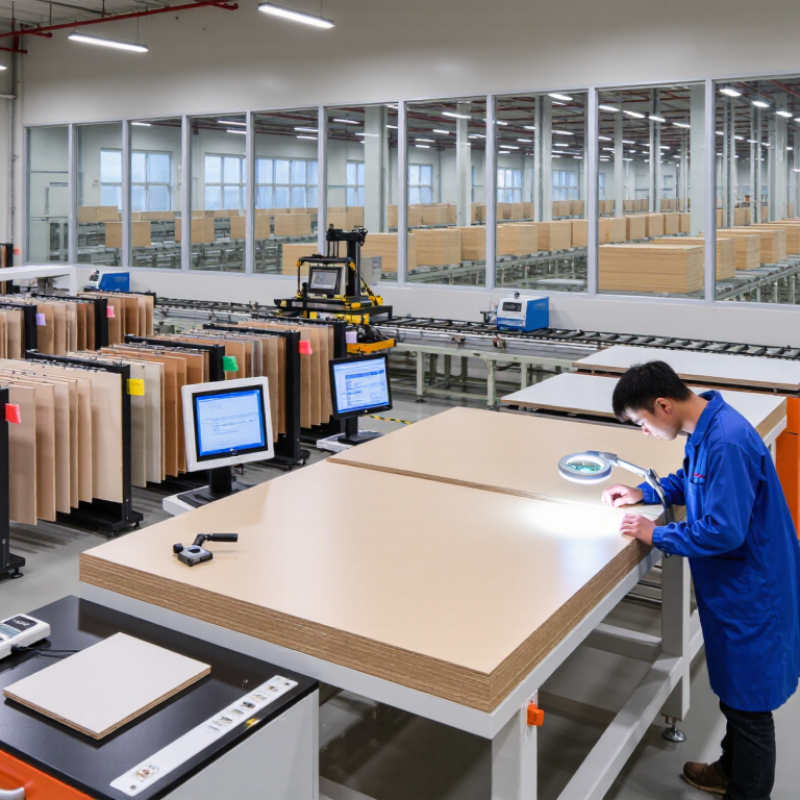
Ask for evidence you can verify. Review the mill’s product specifications, recent test reports, production capacity, and export experience. Check whether the stated thickness, density, bonding performance, and formaldehyde class match your intended use and destination-market requirements. Request traceable batch records and clear inspection procedures. A close look at board edges can reveal uneven strands or weak bonding, but visual checks alone are not enough. Details matter.
This guide outlines practical checks for shortlisting factories, comparing samples, reviewing documentation, and managing shipment risk. It also considers questions that buyers sometimes miss, such as how suppliers handle production changes or delays. No checklist is perfect. A supplier may perform well on paper and still need closer follow-up. Use current test results and independent verification where appropriate, and confirm requirements before placing an order.
Define Your OSB Requirements and Project Specifications
How to Choose a China OSB Supplier in 2026?
Define Your OSB Requirements and Project Specifications
Before contacting suppliers, describe how the panels will be used. Interior partitions, roof sheathing, and packaging need different performance characteristics. Record the required thickness, panel size, quantity, edge profile, and surface finish. For example, a 12 mm panel may suit one application but fail another. Confirm the relevant performance standard and moisture conditions for your destination market. Requirements vary, so avoid relying on a generic grade name alone.
Set measurable acceptance criteria. Specify thickness and length tolerances, bonding or strength requirements, and any emissions limits that apply to your project. Ask what inspection records and test documents can be provided with each order. Include packaging details, delivery location, and acceptable shipment timing. A common mistake is leaving these until quotation review. Your first draft may need revision; that is better than discovering a mismatch after production begins.
Tips: Send a marked-up drawing or sample specification. Identify which requirements are essential and which allow alternatives. Ask suppliers to confirm each item in writing, especially standards, tolerances, and documentation. Keep the request consistent across quotations. It saves time.
Compare OSB Grades, Standards, and Intended Applications
When choosing a China OSB supplier, compare the panel’s grade with the conditions it will face. EN 300 classifies OSB/1 for non-structural use in dry conditions, OSB/2 for structural use in dry conditions, OSB/3 for structural use in humid conditions, and OSB/4 for heavy-duty structural use in humid conditions. “Humid” does not mean permanent water exposure. For North American projects, ask whether panels meet the applicable PS 2 requirements and carry recognized performance ratings. Standards differ by market.
Check the intended application, not just the grade printed on a quotation. APA’s Engineered Wood Construction Guide explains span ratings such as 24/16: the first number refers to roof supports spaced up to 24 inches apart, and the second to floor supports spaced up to 16 inches apart, under specified conditions. That detail matters when selecting sheathing for a roof or subfloor. Ask suppliers for current test reports covering bending strength, internal bond, thickness swelling, and formaldehyde emissions where relevant. Match report values to the project specification and destination-market standard. A tidy certificate is useful, but it cannot prove every shipment is consistent. I would check batch records and inspect panel edges, too; this step is easy to overlook. A damp warehouse can compromise otherwise suitable panels.
How to Choose a China OSB Supplier in 2026? — Compare OSB Grades, Standards, and Intended Applications
| OSB Grade or Standard | Typical Service Conditions | Typical Intended Applications | What to Confirm with the Supplier |
|---|---|---|---|
| OSB/1 — EN 300 Non-load-bearing panels for use in dry conditions | Interior conditions where the panel is not expected to carry structural loads and is protected from persistent moisture. | General interior fitments, furniture components, and other non-structural uses where the panel specification is suitable. | Confirm the panel is explicitly declared as OSB/1 and is suitable for the intended finish, thickness, and indoor service conditions. |
| OSB/2 — EN 300 Load-bearing panels for use in dry conditions | Structural use in dry service conditions. Not intended for recurring wetting or prolonged exposure to high humidity. | Load-bearing floors, walls, or roof components in dry interior applications, subject to structural design and local code requirements. | Request declared mechanical properties, thickness and edge details, panel dimensions, and installation guidance for the proposed structural use. |
| OSB/3 — EN 300 Load-bearing panels for use in humid conditions | Load-bearing use in humid conditions. This classification does not mean the panel is waterproof or suitable for permanent outdoor exposure. | Structural sheathing, flooring, or roof decking in applications where humid conditions may occur, with suitable weather protection and detailing. | Check the declared grade, relevant performance documentation, edge protection, and requirements for temporary exposure during construction. |
| OSB/4 — EN 300 Heavy-duty load-bearing panels for use in humid conditions | More demanding load-bearing applications in humid conditions than the OSB/3 category; actual performance still depends on declared properties and design. | Higher-demand structural panels where the project design specifies the relevant performance level and service conditions. | Verify declared structural properties and applicable test or conformity documents; do not select by grade name alone. |
| GB/T 41715-2022 Chinese national product standard for oriented strand board | Use the standard and product classification stated in the supplier’s current technical documents. Do not assume a direct one-to-one match with EN 300 grades. | Applications specified by the panel’s declared characteristics, the project design, and applicable Chinese requirements. | Ask for the standard edition, product classification, test report, declared properties, and confirmation that the tested product matches the offered panel. |
| EN 13986 European standard covering wood-based panels for construction | Relevant where OSB is placed on the European construction market; applicable conformity and documentation requirements depend on the product and intended use. | Construction uses covered by the applicable product declaration and project specification. | For applicable products, check the Declaration of Performance and CE-marking information, along with the stated intended use and declared characteristics. |
| PS 2 North American performance standard for wood structural panels | Structural suitability is identified through the panel’s applicable performance and span-rating information, rather than by assuming equivalence to an EN grade. | Structural sheathing and other uses allowed by the panel rating, project design, and applicable building requirements. | Confirm the applicable PS 2 edition, panel grade or span rating, thickness, exposure classification, and supporting product documentation. |
Selection note: Grades and standards are not automatically interchangeable. Before ordering, match the panel’s declared standard, properties, thickness, edge profile, and moisture conditions to the project specification. Structural design and local code requirements determine whether a panel is suitable for a particular floor, wall, or roof application.
Verify Supplier Credentials, Factory Capacity, and Quality Controls
How to Choose a China OSB Supplier in 2026?
Supplier claims deserve evidence. FAOSTAT’s 2022 Forestry Production and Trade data records roughly 400 million m³ of global wood-based panel production, showing the scale of this market. It does not verify any individual mill. Check the supplier’s registered business details, factory address, and certificate scope with the issuing body. A certificate with an expired date or unrelated product category is not proof of OSB quality.
Ask for a recent factory audit and production records. Match stated capacity against press lines, shifts, maintenance logs, and actual shipment volumes. Capacity figures can look impressive; I would treat them cautiously until the records agree. Review quality controls for core-layer distribution, thickness, moisture, bonding, and formaldehyde emissions. Request recent test reports tied to the exact product grade and applicable standard, such as EN 300. Check whether independent laboratory results match the mill’s own inspection sheets.
Tips: Request a sample from the production line, not a display board. Compare its thickness at several points, inspect the edges, and keep the test report with the purchase specification. A small inconsistency matters.
Evaluate Samples, Pricing, Lead Times, and Shipping Options
Ask each China OSB supplier for samples from current production, not display stock. Check thickness at several points with calipers, then inspect edges, surface consistency, and loose strands. Match the panel grade and intended use to your project. Request relevant test reports and confirm what they cover. Look closely. A clean sample is useful, but it cannot prove every batch will match. This check has limits.
Compare written quotations on the same basis: panel dimensions, thickness, grade, order quantity, packaging, and delivery terms. A low unit price may exclude palletizing, inland transport, or port charges. Ask for a line-by-line breakdown and clarify which costs may change. Check whether the quote has an expiry date. Small details matter.
Request separate timelines for sample approval, production, and dispatch. Confirm the estimated production window, current order queue, and what happens if a shipment is delayed. Ask which shipping options are available, how the panels will be protected against moisture, and whether tracking documents will be provided. Get key commitments in writing. Plans can shift, and a supplier’s estimate is not a guaranteed arrival date. Compare the landed cost and schedule against your own project deadlines before deciding.
Review Contracts, Compliance Documents, and After-Sales Support
When choosing a China OSB supplier in 2026, read the contract against the product you actually need. Specify board thickness, dimensions, grade, surface finish, and acceptable tolerances. Include the agreed test method and inspection point, not just a general promise of “consistent quality.” Small gaps matter. A vague delivery clause can leave both sides arguing over damaged edges or late shipments.
Ask for current compliance documents that match the exact product, plant, and destination market. Check issue dates, report scope, and whether the documents identify the same board construction you plan to order. Request batch traceability and recent test results where relevant. A polished PDF is not proof by itself; I would verify key details with the issuing body when possible. Requirements can change, so confirm them for your shipment rather than relying on an old checklist.
After-sales support should be written into the agreement too. Set a clear process for reporting defects, including response times, required photos, sample handling, and who pays for follow-up testing. Ask how the supplier handles claims involving swelling, delamination, or transit damage. Get a named contact and an escalation route. A fast reply is reassuring, but a vague promise to “solve problems” is not a useful service standard. I would still ask for a sample claim workflow before placing a large order.
China OSB Supplier Compliance: Formaldehyde Emission Limits
Maximum formaldehyde emission concentration by class under China’s GB/T 39600-2021 (mg/m³). Lower limits indicate stricter emission requirements.
When reviewing an OSB supplier, request a valid test report identifying the product and test method, and confirm the reported class meets your project’s requirements. Source: GB/T 39600-2021, Classification of Formaldehyde Emission of Wood-Based Panels and Finishing Products.

