

2026 Top PVC Marble Sheet Types for Global Buyers
A PVC Marble Sheet can give a wall the veined look of stone without the weight of a full marble slab. But appearance is only one buying factor. For global buyers, the right choice also depends on panel thickness, surface finish, backing, installation method, and the supplier’s technical documentation. A glossy sheet may brighten a dim hallway; a matte finish can soften glare under strong showroom lights. Small details matter.
This guide compares common PVC Marble Sheet types, including high-gloss, matte, UV-coated, and textured options. It also explains how print clarity, edge finishing, and surface consistency affect the finished wall. As a fictional materials specialist created for this introduction, Maya Chen offers this editorial line: “Choose the finish for the room, then verify the panel behind the pattern.” This is a drafted quotation, not a verified statement from a real expert.
Buyers should request current product specifications and inspect physical samples before placing large orders. Check how the surface looks beside actual lighting, and review the substrate and installation guidance. A catalog image cannot show every flaw. Nor does one attractive sample guarantee that an entire shipment will match. This guide aims to make comparisons clearer, while recognizing that product performance varies by manufacturer and application. Some questions will remain; careful sourcing helps answer them.
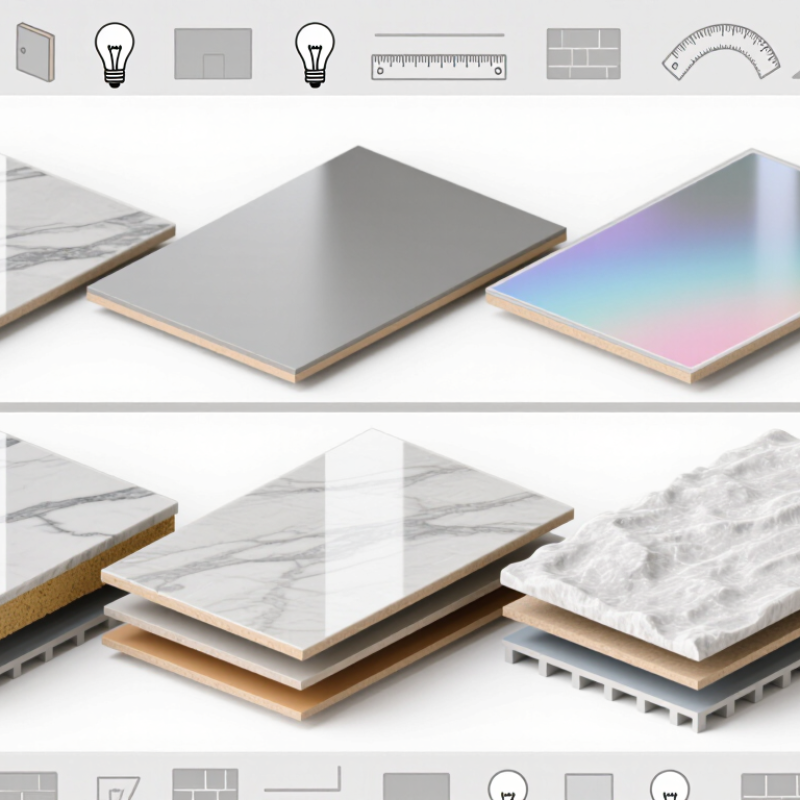
PVC Marble Sheet Basics: 2–5 mm Thickness and 1.22–1.29 m Width
2026 Top PVC Marble Sheet Types for Global Buyers
PVC marble sheets are commonly specified at 2–5 mm thickness. Their typical width ranges from 1.22 to 1.29 m. These dimensions suit wall cladding, bathroom panels, retail interiors, and ceiling applications. A 2 mm sheet is lighter and easier to cut. A 5 mm sheet feels more solid and resists handling damage better. The choice depends on wall flatness, installation method, and expected impact.
Industry reviews from Grand View Research and IMARC Group identify decorative wall panels as a growing interior materials segment. Their reports also highlight demand for lightweight, waterproof, and fast-installation products. However, market reports rarely replace project testing. Buyers should request actual samples. Check thickness tolerance, width tolerance, surface gloss, backing quality, and batch consistency. A wide sheet can expose uneven walls quickly. That detail is sometimes underestimated.
Tips: Confirm the usable width, not only the advertised width. Measure 2–5 mm thickness at several points. Ask for test data covering surface wear, moisture resistance, and fire performance. Also check thermal movement, especially on long walls near windows. PVC expands with heat. A small allowance helps. I have seen attractive sheets fail because the substrate was poorly prepared. The material was not always the real problem.
Core Types: Solid PVC, Hollow-Core, and Stone-Powder Composite Sheets
2026 Top PVC Marble Sheet Types for Global Buyers
PVC marble sheets are moving from decorative niches into broader interior projects. Grand View Research valued the global PVC market at about USD 58.3 billion in 2023 and expects steady growth through 2030. This supports continued demand for lightweight wall finishes, but market growth does not remove quality risks.
Solid PVC sheets offer dense, smooth surfaces with clear marble patterns.They suit bathrooms, lift interiors, reception walls, and retail counters. Their low water absorption simplifies cleaning. However, dense sheets can be heavier and less forgiving during cutting. A small saw mistake may damage the visible face.
Hollow-core sheets reduce weight and material use. Their internal cavities make installation easier on ceilings and large wall areas. Yet, pressure points can cause dents if the backing is weak.
Stone-powder composite sheets add mineral filler to improve stiffness and create a cooler, more stone-like touch. MarketsandMarkets forecasts continued expansion in PVC-related construction materials, but reports often group several product categories together. Buyers should not treat broad market figures as direct proof of sheet performance.
Request thickness tolerance, surface-wear data, fire-test documentation, and water-resistance results.Check a cut edge, not only a polished sample. The best-looking panel may still fail around screws, corners, or humid joints.
Surface Finishes: Gloss, Matte, UV-Coated, and Embossed Designs
2026 Top PVC Marble Sheet Types for Global Buyers
Surface Finishes: Gloss, Matte, UV-Coated, and Embossed Designs
Gloss finishes create sharp reflections and make narrow rooms feel brighter. They suit reception desks, wall panels, and decorative columns. However, strong lighting can reveal fingerprints, uneven walls, and small surface scratches. A sample may look impressive under showroom lights but less comfortable in a real room.
Matte surfaces offer softer reflections and hide minor marks more effectively. They work well in bedrooms, offices, and high-touch areas. Dust can still collect on textured matte films, especially around wall joints. Regular cleaning remains necessary. Do not assume matte always means low maintenance.
UV-coated sheets provide an added protective layer against fading and surface wear. Buyers should request coating thickness, adhesion results, and weathering data. Indoor performance is not equal to outdoor performance. Embossed designs add stone-like depth through raised veins and tactile grain. They can improve visual realism, yet deep patterns may complicate cutting and edge bonding. In installation checks, embossed sheets need careful alignment at every seam.
Finish selection should match lighting, traffic, cleaning habits, and local building requirements. Color consistency should also be checked across production batches. A small panel cannot show every risk. Practical testing is still worthwhile.
Performance Standards: EN 13501-1, ASTM E84, and ISO 16000 VOC Tests
2026 Top PVC Marble Sheet Types for Global Buyers
PVC marble sheets are becoming more varied in 2026. Buyers can choose high-gloss, matte, embossed, and stone-textured surfaces. Large-format sheets reduce joint lines on hotel walls, retail counters, and residential bathrooms. However, appearance should never replace performance testing.
EN 13501-1 classifies reaction to fire under European methods. The final rating depends on the sheet, adhesive, substrate, thickness, and installation. ASTM E84 measures flame spread and smoke-developed values in a tunnel test. These results are useful, but they do not automatically equal EN classifications. ISO 16000 testing examines indoor air pollutants and VOC emissions. Ask for test conditions, sample thickness, curing time, and laboratory details. A certificate without this information can mislead. That is an uncomfortable issue.
Tips: Request reports for the exact product structure. Check whether the test used the same backing and adhesive. Compare VOC results with the project’s indoor-air requirements. Keep retained samples for later inspection. Small details matter.
In practical purchasing, buyers should review color-film stability, dimensional movement, surface hardness, and cleaning resistance. A darker marble pattern may hide scratches, while a glossy finish shows dust quickly. Some suppliers provide strong laboratory data but limited installation guidance. That gap deserves attention. Performance can change after cutting, edge sealing, or poor ventilation. A careful buyer therefore evaluates the complete wall system, not only the decorative sheet.
Global Buyer Guide: Match Sheet Types to Climate, Use, and Compliance Needs
2026 Top PVC Marble Sheet Types for Global Buyers
Choosing PVC marble sheets starts with the installation environment, not the surface pattern. For humid coastal buildings, solid PVC sheets with sealed edges can reduce water-related damage. Foam PVC sheets are lighter and easier to handle on large walls. However, their lower density may affect impact resistance in busy corridors. Edges matter. Request samples before ordering.
Hot climates need attention to thermal movement. Select sheets with stable backing, suitable expansion gaps, and installation guidance for high temperatures. Light marble tones can reduce visible fading under strong sunlight, but outdoor exposure requires verified UV performance. In bathrooms, kitchens, and hotel interiors, a smooth, cleanable surface is useful. It does not replace correct ventilation or joint sealing.
Compliance requirements differ by destination and building type. Ask for current test documents covering fire behavior, formaldehyde or VOC emissions, heavy metals, and product composition. A certificate without a matching product specification is not enough. Confirm thickness, surface coating, batch consistency, and packaging labels before shipment. In my view, buyers sometimes focus too heavily on appearance. That is a costly mistake. Keep installation tolerances realistic, because a perfect showroom panel may reveal uneven walls, weak adhesive, or visible joints on site. Test reports matter.EIF
2026 Top PVC Marble Sheet Types for Global Buyers — Global Buyer Guide: Match Sheet Types to Climate, Use, and Compliance Needs
| Sheet Type | Typical Construction | Common Thickness Range | Climate Fit | Suitable Uses | Key Limitations | Buyer Checks and Compliance Documents |
|---|---|---|---|---|---|---|
| Standard decorative PVC marble sheet | Rigid PVC-based sheet, often compounded with mineral filler, printed with a marble pattern and finished with a clear protective coating. | About 2–5 mm; confirm the actual construction and tolerance with the supplier. | Best suited to controlled indoor environments. In hot or humid locations, verify dimensional stability, bonding system, and installation details. | Interior feature walls, ceilings, reception areas, and other decorative surfaces not subject to heavy impact. | Not a substitute for structural cladding or a waterproofing system. Avoid prolonged direct sunlight, high heat, and outdoor exposure unless the product is specifically tested and rated for those conditions. | Request a current technical data sheet, installation instructions, thickness and flatness tolerances, and applicable chemical or emissions test reports. For EU sales, check relevant REACH obligations and any applicable national requirements. |
| UV-coated PVC marble sheet | PVC decorative sheet with a UV-cured surface coating intended to improve surface hardness, gloss, and resistance to everyday staining or scratching. | About 2–5 mm, depending on the core and finish. | Suitable for indoor rooms with ordinary temperature variation. A UV-cured coating does not by itself establish suitability for exterior sunlight or extreme heat. | Interior wall panels in homes, retail spaces, offices, and light-use hospitality areas. | Surface performance varies by coating formulation and thickness. Confirm resistance to the cleaning products and abrasion expected in the project. | Ask for coating and abrasion-test details, cleaning guidance, and the product’s stated service conditions. Request market-specific chemical compliance documentation; do not assume a coating claim proves compliance with every market regulation. |
| Co-extruded or capped PVC marble sheet | Decorative PVC surface layer combined with a separately formulated protective cap layer, typically manufactured as a multi-layer sheet. | About 3–6 mm; layer construction and total thickness are product-specific. | Can be considered for environments needing greater surface durability, but hot, humid, or sun-exposed installations still require product-specific testing. | Interior corridors, commercial wall finishes, and areas requiring a more durable decorative face than a basic printed sheet. | “Capped” does not automatically mean outdoor-grade, impact-proof, or waterproof at joints. Check edge and seam details for the intended installation. | Request a layer-construction description, adhesion or delamination test information, dimensional-stability data, and installation instructions. For public projects, obtain the fire classification required by the local building code. |
| High-mineral-content rigid PVC marble sheet | Rigid PVC compound with a relatively high mineral-filler proportion and a decorative marble-pattern surface; formulation varies by manufacturer. | About 2.5–5 mm; compare weight, stiffness, and impact performance as well as nominal thickness. | Generally intended for indoor use. In humid climates, use compatible adhesives and follow substrate-preparation and ventilation requirements. | Decorative wall and ceiling panels where a stiffer sheet is preferred and the substrate is properly prepared. | Higher filler content can change weight, brittleness, and fastening behavior. Do not infer strength from thickness alone; test the complete installed system where loads or impacts matter. | Request composition or product declarations where available, density or weight per area, impact data, and fixing guidance. Verify that adhesives and sealants are suitable for PVC and the local temperature range. |
| Fire-retardant PVC marble sheet | PVC-based decorative sheet formulated with flame-retardant additives; performance depends on the exact formulation, thickness, substrate, and installation assembly. | Commonly about 2–5 mm, but fire performance must be verified for the exact product and build-up. | Climate suitability is determined by the base sheet and installation system; fire-retardant formulation alone does not establish heat or weather resistance. | Interior projects where the building specification requires documented reaction-to-fire performance, subject to local code approval. | “Fire-retardant” is not a universal rating. A test result for one thickness, backing, adhesive, or mounting method may not apply to another assembly. | Obtain a valid test report or classification for the exact product and intended assembly, such as an applicable EN 13501-1 classification or ASTM E84 result where accepted by the project jurisdiction. Confirm the required test method with the local authority or specifier. |
| Thin PVC decorative overlay sheet | Thin printed PVC decorative layer, sometimes supplied for bonding to a separate panel or substrate rather than for use as a stand-alone rigid sheet. | Often below 2 mm; verify whether the stated thickness includes any backing or protective layer. | Indoor use on a stable, dry substrate is typical. Temperature and humidity performance depends heavily on the substrate and adhesive. | Furniture or cabinet finishing, decorative lining, and other applications where the overlay is supported by a suitable base. | Usually requires a compatible substrate and adhesive. It should not be treated as a self-supporting wall panel unless the product is specifically designed and tested for that use. | Request substrate-preparation and adhesive instructions, bond-strength information, and any relevant emissions or chemical test reports. Check that the adhesive is rated for the project’s service temperature and humidity. |
Buyer note: Thickness ranges and use descriptions are indicative, not universal product specifications. PVC marble sheets differ by formulation, construction, and test method. Before ordering, verify the exact product data, installation assembly, local building-code requirements, and market-specific chemical or fire documentation. No sheet should be assumed suitable for exterior exposure, wet-area waterproofing, or regulated fire applications without evidence for that specific use.

