
WAREHOUSE & SHOWROOM

15700 Middlebelt Rd
(Between 5 & 6 Mile)
Livonia, MI 48154

(734) 751-4413

HOURS

Now open earlier!
Sunday: 11:00 am – 5:00 pm
Monday: 11:00 am – 6:00 pm
Tuesday: CLOSED
Wednesday: CLOSED
Thursday: 11:00 am – 6:00 pm
Friday: 11:00 am – 6:00 pm
Saturday: 10:00 am – 6:00 pm

2026 Top Dining Set Types for Global Buyers?

Choosing the right dining sets in 2026 requires more than following showroom trends. Global buyers now compare comfort, durability, space efficiency, sustainability, and long-term value. A polished table may attract attention, but weak joints or unsuitable finishes can disappoint after months of use.

This guide introduces leading dining set types for international markets, including solid wood, engineered wood, glass, metal, ceramic, extendable, and compact designs. Each category serves different homes, hospitality projects, and purchasing budgets. For example, an extendable table can seat four people daily and accommodate eight guests during celebrations. Stackable chairs may reduce warehouse space and shipping costs. However, they can sacrifice comfort if their proportions are poorly designed.

Reliable selection depends on practical evidence. Buyers should review material specifications, load testing, surface resistance, packaging quality, and supplier communication. Regional preferences also matter. A humid coastal market may require better moisture protection, while smaller urban apartments often favor rounded edges and folding features. Certifications and safety documentation should be verified through trustworthy sources, not assumed from attractive product descriptions.

No single dining set fits every global buyer. That is the difficult part. Even sustainable materials can involve complex supply chains and higher maintenance needs. A lower price may look efficient, yet replacement costs can change the calculation. By examining design, construction, care requirements, and regional use conditions, purchasing teams can make more defensible decisions. This overview offers a practical starting point, while reminding readers to test samples before placing large orders.
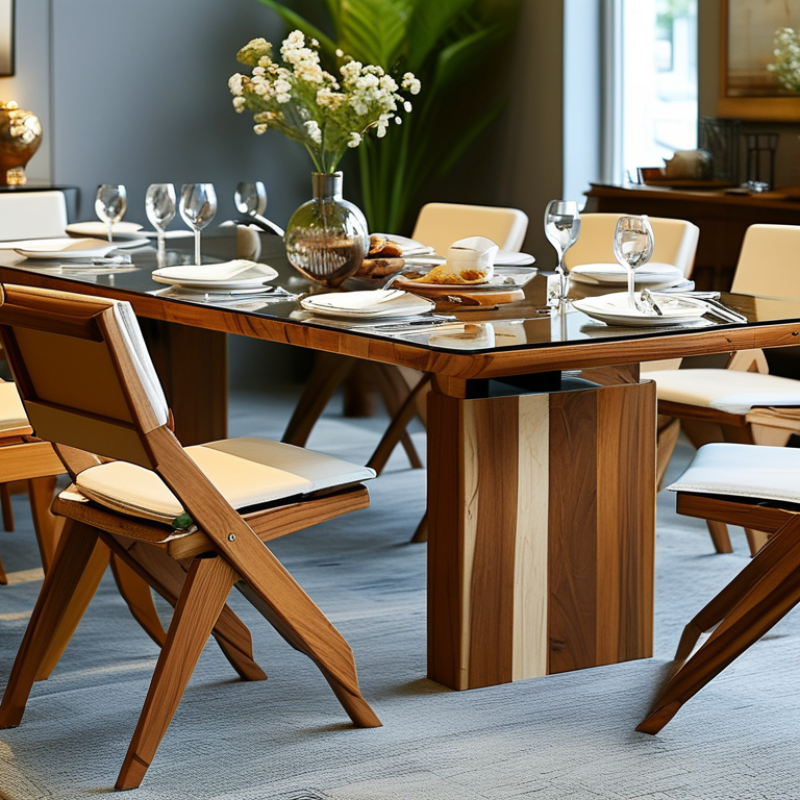
2026 Top Dining Set Types for Global Buyers?

Global Dining Set Market: 2026 Size, CAGR Forecasts, and Regional Data

Global Dining Set Market: 2026 Size, CAGR Forecasts, and Regional Data

The global dining set market is expanding with residential construction, hospitality upgrades, and smaller urban homes. Category definitions remain inconsistent. Some reports include tables only, while others include chairs and storage.

IMARC Group valued the global furniture market at about US$747.3 billion in 2024. It forecasts a 5.2% CAGR from 2025 to 2033. This broader benchmark supports steady dining furniture demand through 2026. Sector reports from Grand View Research also identify Asia-Pacific as a major growth region, supported by urban housing and rising household spending. North America remains important for premium extendable tables, upholstered seating, and coordinated six-seat sets. Europe shows stronger interest in compact designs, recycled materials, and durable finishes.

Regional demand is not uniform. Buyers in Southeast Asia often favor lightweight wood or engineered panels for flexible apartments. Gulf markets typically require larger tables, stronger frames, and heat-resistant surface treatments.

In Europe, package dimensions matter because narrow stairways complicate delivery. Global buyers should compare dining set revenue, unit shipments, and average selling prices separately. They are not interchangeable.

Forecasts are not promises. Exchange rates, freight costs, housing cycles, and import duties can alter the 2026 outlook quickly. A practical review should test three scenarios: stable growth, slower housing demand, and a freight-cost shock. The weak point is data quality. Many published estimates combine dining furniture with broader home furnishings, which can overstate the true dining set market.

Four-Seater Sets: 120–140 cm Tables for Compact Urban Homes

For global buyers, four-seater dining sets balance comfort with limited floor space. A 120–140 cm table usually seats two people on each long side, with occasional end seating. Measure the room before shopping. Leave at least 90 cm behind occupied chairs for movement. In a small apartment, a 120 cm rectangular table can fit beside a kitchen wall without blocking cabinet doors. A 140 cm model feels more relaxed when plates, serving bowls, and laptops share the surface. Keep it simple. Rounded corners matter. They reduce sharp contact points in narrow passageways.

Practical installation checks show that four matching chairs are not always the best choice. Slim chairs with open backs can make a compact room look lighter, but firm support remains important during longer meals. Check seat height against table height. A small mismatch becomes uncomfortable quickly. Solid wood adds visual warmth, while engineered panels may reduce weight and shipping costs. Moisture-resistant finishes deserve attention in humid cities. Still, no finish is maintenance-free. Wipe spills promptly and avoid placing hot cookware directly on the tabletop. Buyers should confirm carton dimensions, assembly tools, replacement hardware, and delivery access. A beautiful set can fail at the elevator. For frequent hosts, an extendable 120 cm table may be wiser than a fixed 140 cm design. Yet extension leaves need storage. That detail is easy to overlook.

2026 Top Dining Set Types for Global Buyers? – Four-Seater Sets: 120–140 cm Tables for Compact Urban Homes
Dining Set Type Typical Table Size Table Shape Seating Layout Recommended Room Footprint Common Materials Chair Seat Height Best Fit for Compact Homes
Rectangular Extension Set 120–140 × 75–85 cm
(47–55 × 30–33 in)
Rectangular Four chairs; optional center or butterfly extension Approx. 280–320 × 235–275 cm
(9.2–10.5 × 7.7–9.0 ft)
Solid wood, wood veneer, engineered wood, metal hardware 45–48 cm
(17.7–18.9 in)
Most versatile
Suitable for daily meals and occasional guests.
Round Pedestal Set 120–130 cm diameter
(47–51 in)
Round Four chairs positioned evenly around the table Approx. 270–295 × 270–295 cm
(8.9–9.7 × 8.9–9.7 ft)
Glass or ceramic top, solid wood, engineered wood, steel pedestal 45–48 cm
(17.7–18.9 in)
Easy circulation
No sharp corners; useful in open-plan apartments.
Square Compact Set 120–130 × 120–130 cm
(47–51 × 47–51 in)
Square One chair on each side Approx. 275–300 × 275–300 cm
(9.0–9.8 × 9.0–9.8 ft)
Wood veneer, laminate, solid wood, powder-coated steel 45–48 cm
(17.7–18.9 in)
Balanced layout
Works well in nearly square dining areas.
Drop-Leaf Set 120–140 × 75–85 cm fully open
60–90 × 75–85 cm folded
Rectangular or oval Two to four chairs, depending on leaf position Approx. 250–320 × 220–275 cm
(8.2–10.5 × 7.2–9.0 ft)
Rubberwood, engineered wood, laminate, metal hinges 45–48 cm
(17.7–18.9 in)
Space saving
Useful for kitchens or homes with changing dining needs.
Bench-Side Dining Set 120–140 × 75–80 cm
(47–55 × 30–31 in)
Rectangular Two chairs plus one bench for two people Approx. 275–320 × 220–260 cm
(9.0–10.5 × 7.2–8.5 ft)
Solid wood, engineered wood, upholstered fabric, steel 45–48 cm
(17.7–18.9 in)
Flexible seating
Bench can slide under the table to reduce visual and floor space.
Counter-Height Set 120–140 × 75–85 cm
(47–55 × 30–33 in)
Rectangular or square Four counter-height stools Approx. 280–320 × 235–280 cm
(9.2–10.5 × 7.7–9.2 ft)
Engineered wood, solid wood, metal, upholstered or molded seats 60–66 cm
(23.6–26.0 in)
Multi-use
Suitable for compact dining kitchens and work-from-home areas.
Glass-Top Metal Set 120–140 × 75–85 cm
(47–55 × 30–33 in)
Rectangular, round, or oval Four chairs with slim frames Approx. 270–315 × 225–270 cm
(8.9–10.3 × 7.4–8.9 ft)
Tempered glass, powder-coated steel, aluminum, synthetic leather 45–48 cm
(17.7–18.9 in)
Light visual effect
Reflective surfaces can make small rooms appear more open.
Upholstered Dining Set 120–140 × 80–85 cm
(47–55 × 31–33 in)
Rectangular or oval Four fully upholstered or padded chairs Approx. 285–325 × 240–280 cm
(9.4–10.7 × 7.9–9.2 ft)
Wood frame, engineered wood, fabric, leather or synthetic leather 45–48 cm
(17.7–18.9 in)
Comfort focused
Recommended where dining chairs are also used for longer gatherings.

Six-Seater Sets: 150–180 cm Tables for Family Dining Demand

For global buyers, six-seater dining sets are gaining attention in 2026. A 150–180 cm table fits family meals without overwhelming many dining rooms. This size usually supports six place settings, depending on chair width and table shape. Rectangular tables offer efficient wall placement. Rounded corners improve movement around busy homes. A 160 cm surface can hold plates, shared dishes, and serving bowls comfortably. Space matters more than appearance. Measure twice.

Experienced sourcing teams should check more than listed dimensions. Confirm tabletop thickness, leg clearance, chair footprint, and carton protection. Each diner generally needs about 60 cm of table edge for comfort. Six chairs may require 240 cm or more when fully pulled out. Material selection also affects long-term performance. Stable engineered panels can reduce seasonal movement, while solid wood needs controlled indoor humidity. Finishes should resist spills, warm plates, and repeated wiping. Small details become costly overseas.

Global buyers should request assembly drawings, load-test information, and sample checks before larger orders. Packaging tests can reveal corner damage that product photos hide. Suppliers should provide consistent measurements and clear care guidance. Still, the six-seat format is not universal. Narrow apartments may prefer a 150 cm table with slimmer chairs. Larger households may find 180 cm restrictive. I once saw a beautiful set lose usability because chair arms blocked every seat. That mistake was avoidable, but easy to miss. Recheck real room layouts, not only catalog images.

Extendable Sets: Flexible 4–8 Seat Capacity for Global Buyers

Extendable Dining Sets: Flexible 4–8 Seat Capacity for Global Buyers

Extendable dining sets are becoming practical choices for apartments, hospitality projects, and family homes. A compact table can seat four people daily, then expand to eight during gatherings. Grand View Research estimates that the global dining room furniture market will continue growing through 2030, supported by urban housing and changing household needs. Flexible capacity fits this shift well.

A useful export specification includes a 120–160 centimeter closed length and a 200–240 centimeter extended length. Buyers should also check at least 90 centimeters of chair clearance around the table. Smooth extension rails matter. So does storage for removable leaves. Poorly aligned leaves quickly create uneven surfaces, especially after repeated use. That detail is often underestimated.

The International Data Corporation reports continuing growth in online furniture purchasing, making product specifications more important for remote buyers. Clear assembly drawings, carton dimensions, material descriptions, and tested load information reduce purchasing risk. Moisture-resistant engineered wood can support consistent performance across different climates, but it is not automatically waterproof. Sellers should state realistic care requirements and warranty conditions. Still, flexibility is not magic. An eight-seat table needs strong joints, stable legs, and enough surrounding space. Load testing and repeated opening trials provide better evidence than attractive photographs.

2026 Top Dining Set Types for Global Buyers: Extendable Sets (4–8 Seats)

This planning chart shows typical rectangular table lengths for extendable dining sets based on approximately 60 cm of table edge space per seated diner. Extendable designs can move from compact four-seat configurations to larger six- and eight-seat layouts, helping global buyers balance everyday space efficiency with occasional hosting capacity.

Wood, Glass, and Metal Sets: FSC, EN 12521, and ANSI/BIFMA Standards

2026 Top Dining Set Types for Global Buyers?

Wood, glass, and metal sets serve different dining environments. Wood remains popular because it feels warm and repairs well. The 2024 Global Forest Resources Assessment records about 4.06 billion hectares of forests worldwide. Buyers should request FSC-certified wood, not vague claims such as “eco-friendly.” FSC documentation can support responsible sourcing, but it does not prove every table is durable.

EN 12521 is more practical for household dining tables. It evaluates strength, stability, and durability under domestic use. A heavy oak table may still fail if its joints loosen after repeated loading. Glass offers visual lightness, yet edge protection and impact testing deserve careful review. Metal frames resist moisture, but thin tubing can flex noticeably. Small details matter.

Tips: Ask for test reports, material thickness, load limits, and care instructions. Check whether EN 12521 testing covers the complete set, not only the tabletop. ANSI/BIFMA standards mainly address commercial and office furniture, but they can indicate stronger performance expectations for contract dining projects. A 2024 market analysis places global furniture growth near a mid-single-digit annual rate, increasing sourcing pressure. I would still avoid treating any report as absolute truth. Regional testing methods, user habits, and assembly quality can change the result. Test samples before ordering large volumes.